

Episode 1
The 6 Types of Alzheimer’s & How to Prevent Them
Discover the real causes and the 6 key risk factors you can control starting today.
Dr. Robert Love, PhD

5 episodes. Science-backed solutions. A healthier brain—starting today.
Get My Masterclass
Invest in your brain. Protect your future.
Start Your Exercise Journey Today.
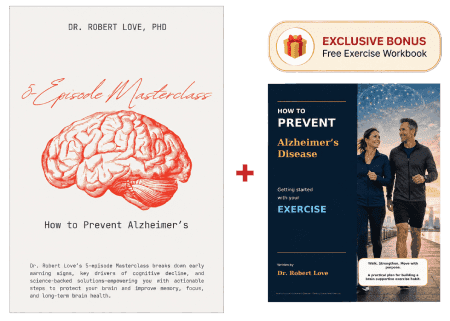
Get My Masterclass+ As a FREE BONUS Get My Exercise E-Book
+ Personalized Group Coaching with Jill
Understand the science behind cognitive decline
Learn proven strategies to protect your brain
Build an exercise routine that supports long-term brain health
Take action with practical tools and next steps
Inside the 5-Episode Masterclass
Expert guidance. Cutting-edge science. Practical strategies you can use right away to improve memory, boost brain health, and reduce your risk.
Episode 1
Discover the real causes and the 6 key risk factors you can control starting today.

Episode 2
The most important nutrients for memory, mood and long-term brain protection.

Episode 3
What to eat (and avoid) to fuel your brain, balance blood sugar and lower inflammation.

Episode 4
Build simple daily habits that improve memory, boost mood and support deep, restorative sleep.

Episode 5
Powerful learning techniques to sharpen focus, build new connections and keep your brain resilient.
Special Limited-Time Offer
5 episodes. Science-backed strategies.
Practical action steps.
 Order Now
+ As a FREE BONUS Get My Exercise E-Book
+ Personalized Group Coaching with Jill
Free Bonus

Meet Jill, an expert coach at Dr. Robert Love's Brain Power Clinic who has worked alongside Dr. Love for the past 3 years, helping people take meaningful steps toward better brain health.
Now, as a special bonus, you'll have the opportunity to join Jill for group coaching sessions where you can ask questions, get expert guidance, and learn how to put Dr. Love's brain health strategies and supplements into practice.
Goal: Move from sedentary to exercising for 20 minutes a day, 5x a week, over the course of 5–8 weeks.
Improves
blood flow
to the brain
Increases
BDNF
Improves
insulin
sensitivity
Reduces
inflammation
Improves
mood
May reduce
dementia
risk
The safest and fastest approach is to work with a qualified trainer.
Invest in your brain. Protect your future.
Start Your Exercise Journey Today.
Get My Masterclass+ Get My Free Exercise E-Book
+ Personalized Group Coaching with Jill
Leg strength is one of the strongest predictors of healthy aging and brain health.
Racket sports challenge your body and brain in unique ways that promote long-term brain health.
Tennis combines:
The brain must:
All at the same time.
Tennis is consistently associated with some of the greatest longevity benefits among recreational sports.
Dancing is more than fun—it’s powerful brain training for body, mind, and connection.
Dancing combines:
Dance is one of the few activities that trains the body, brain, and social system simultaneously.
Train your body and brain together. Doing two things at once builds stronger, more resilient cognitive skills.
The brain must think while moving.
This challenges multiple brain systems at once.
Dual-task exercise builds a sharper, more flexible brain for everyday life.
Consistency matters more than intensity. This balanced plan supports your body, brain, and overall well-being—every single week.
Special Limited-Time Offer
5 episodes. Science-backed strategies.
Practical action steps.
Order Now
+ Get My Free Exercise E-Book
+ Personalized Group Coaching with Jill









 Walk 10–20
 Focus on
 Use a step




 Why Strength
 Start with
 Exercises
 Largest muscles
 Improves glucose
 Supports independence
 Improves balance
 Supports healthy
 Sit-to-stands
 Leg press
 Step-ups
 Squats
 Hill walking
 Brisk walking
 Cycling
 Swimming
 Hiking
 Elliptical
 20–40
20–40
 Improves circulation
 Improves oxygen delivery
 Supports heart health
 Supports brain metabolism
 One Day Must Include Leg Training
 Sample Schedule

 Maintains muscle mass
 Improves metabolism
 Supports healthy aging
 Helps preserve independence
 Table
Table Badminton
 Movement
 Memory
 Rhythm
 Balance
 Social engagement
 Ballroom dancing
 Salsa
Salsa Swing
Swing Line dancing
 Dance trains your brain in ways few other activities can.
 Walking while talking
 Walking while naming animals
 Walking while counting backward
 Group exercise classes
 Tennis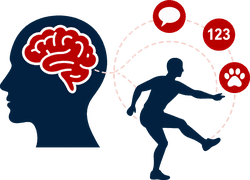
 Enhances executive function
 Improves coordination
 Supports cognitive resilience